Cultural preservation (DOJAM)
January 2017 saw the launch of a cooperation project between the German Protestant Institute for Antiquities of the Holy Land (DEIAHL) and the Department of Antiquities of Jordan (DoA), which is funded by the Gerda Henkel Foundation (GHS) as part of the “Patrimonies” funding initiative.
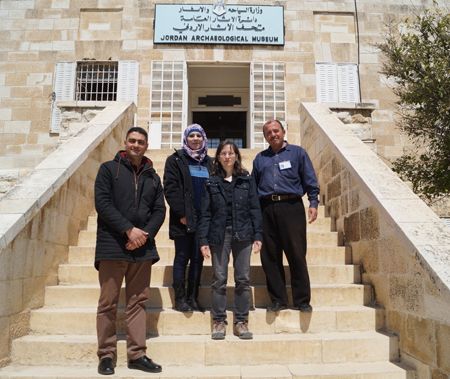
The aim of this four-year project is to preserve the archaeological objects stored or exhibited in Jordan’s museums. This is in line with the DoA’s strategic plan (2014-2018), with work initially focusing on the Jordan Archaeological Museum (JAM) at the Citadel in Amman as a pilot project.
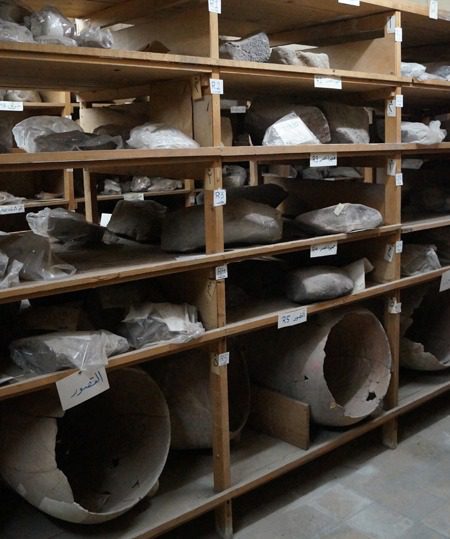
Several tasks are being pursued:
- Creation of a database for museum management and as a research tool
- Photo and 3D documentation of the archaeological objects of the JAM
- Registration and description of the archaeological objects of the JAM
- Restoration of selected archaeological objects
- Management of warehouses and establishment of a restoration workshop
- Development of an emergency plan for hazards caused by natural disasters and armed conflicts
- Training of DoA employees
An eight-episode series produced by the Gerda Henkel Foundation offers a cinematic examination of the aims and motivations of the project.
The homepage of the project with further information can be found at www.zitadelle-amman.de
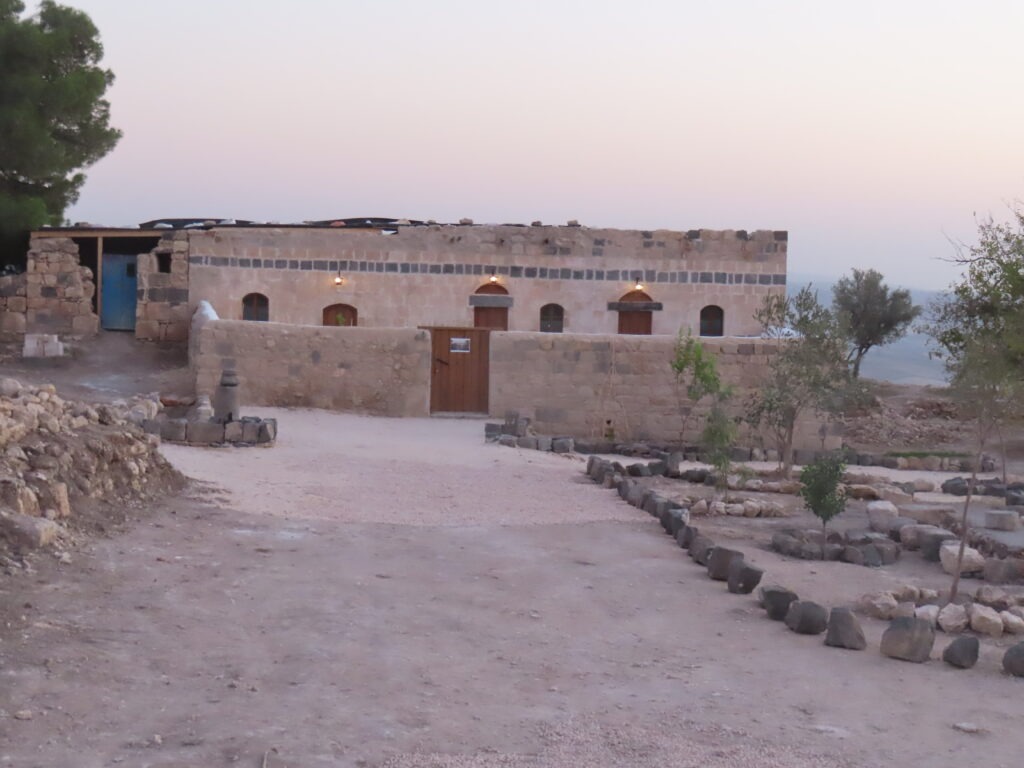
A “Heritage House” in Umm Qays
As early as the 1980s, the DEI campaigned for the preservation of late Ottoman houses in Umm Qays when they were to be demolished to make way for large-scale excavations at the Greco-Roman city of Gadara. With great support from the German embassy, three houses were restored until the 1990s and have since served as an excavation house, museum and office of the Department of Antiquities. Since 2025, the Hosh Aref al Rousan / al Masri, a mature courtyard house complex on the southern edge of the old village, has been undergoing restoration. Once completed, it will serve a special purpose, namely as a heritage house for the local population, where the tangible and intangible cultural assets of this rural region in the north of Jordan can be preserved, studied and communicated. This is based on a concept that was developed together with the local population. The restoration of the building and the further development of the concept are being carried out in cooperation with the AGIL office and with financial support from the Gerda Henkel Foundation and the Foreign Office of the Federal Republic of Germany.